Tie your own.catch more.
Fly of the month, step-by-step tying tutorials, and the videos we send every new tyer to. The vise is where the fishing really starts.
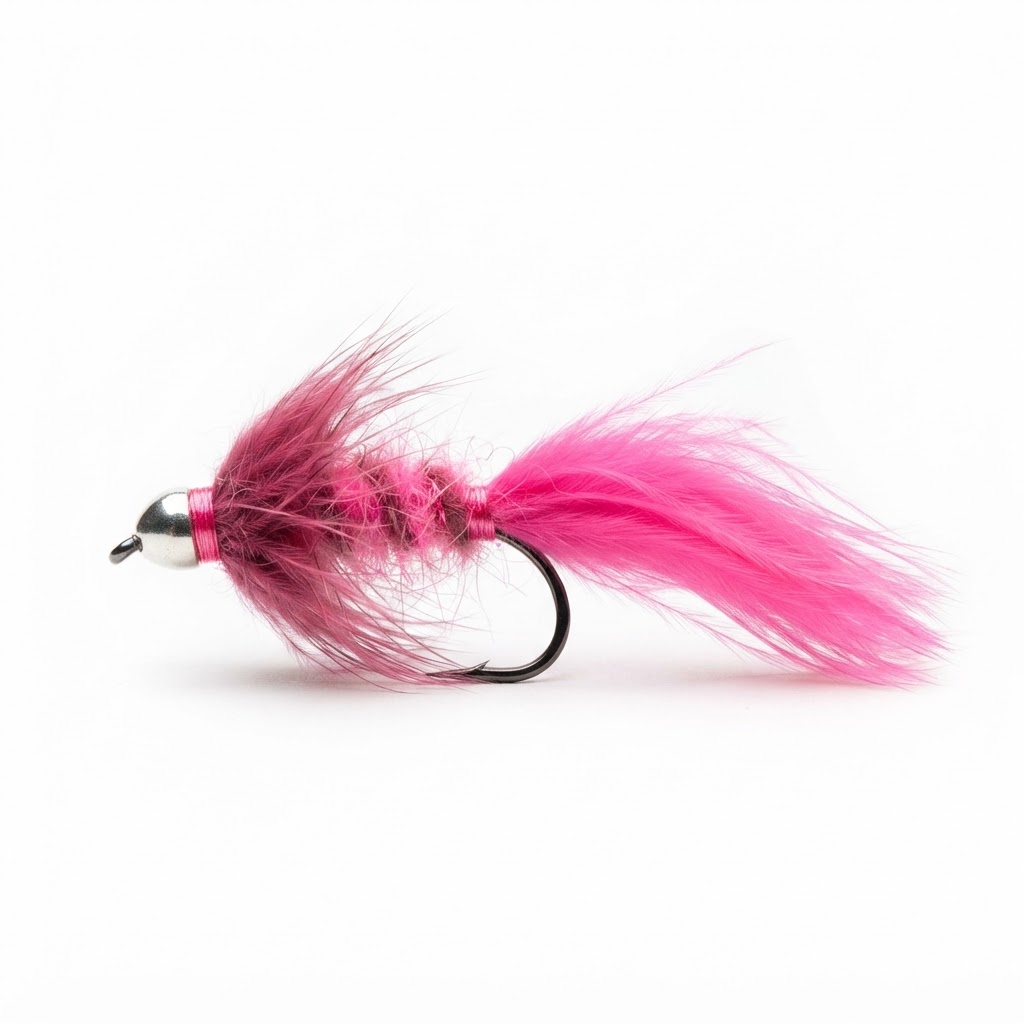
The Pink Bunny Leech
When the water turns cold the browns want a mouthful, not a mouthful of mayflies. This rabbit-strip leech swings, strips, and breathes in the current. It is the first fly out of the box from Thanksgiving through the first thaw.
The Recipe
- Hook
- Size 4–8 streamer hook, 3X long (e.g. TMC 5262 or 79580)
- Head
- Small silver cone, or a tungsten cone if you want it deep
- Thread
- Pink 3/0, heavy enough to bind rabbit down
- Tail
- Hot pink rabbit strip, fur side up, about two hook-lengths
- Body
- The same strip palmered forward in open turns
- Collar
- Pink marabou with a few strands of pearl flash
Step by step
Six moves at the vise for the Pink Bunny Leech. Take your time; the rest of the fly hangs off the base.
- 01Slide the cone onto the point, walk it up to the eye, and start the thread tight behind it.
- 02Lay a thread base back to the bend and add a drop of cement so the fur has something to grip.
- 03Tie in the rabbit strip at the bend, fur side up, and bind it down along the shank.
- 04Palmer the strip forward in open turns, sweeping the fur back with each wrap, and tie off behind the cone.
- 05Tie in the marabou collar and two strands of flash just behind the cone for a soft, breathing profile.
- 06Whip-finish behind the cone, cement the threads, and comb the fur out so nothing fouls the hook.
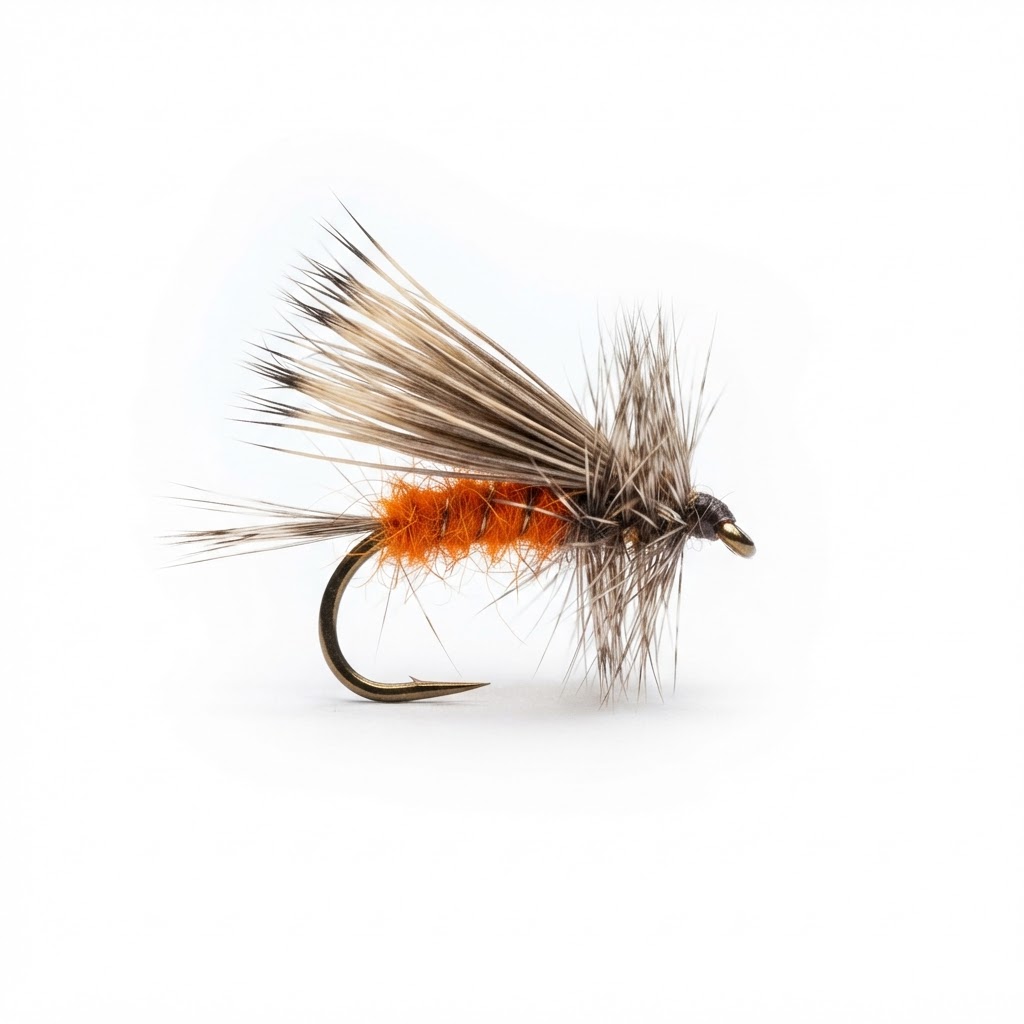
The October Caddis
The big orange sedge that hatches when the leaves turn. Fish it dry through the afternoon and let it skate, or swing the pupa at the tailout when the light drops. Nothing in October eats better.
The Recipe
- Hook
- Size 8–10, 3X long dry-fly hook
- Thread
- Burnt orange 6/0
- Shuck
- Amber Zelon or fine orange yarn, trailing
- Body
- Burnt orange dubbing, packed tight and tapered
- Wing
- Natural elk hair, tips over the eye
- Hackle
- Ginger grizzly, two sizes oversized
Step by step
Six moves at the vise for the October Caddis. Take your time; the rest of the fly hangs off the base.
- 01Start the thread behind the eye and wrap a base back to the bend.
- 02Tie in a short clump of amber Zelon at the bend for a trailing shuck.
- 03Dub a tapered burnt orange body forward to about the two-thirds point.
- 04Tie in a clump of elk hair at the front, tips over the eye, then pull it back and bind it down to form the wing.
- 05Palmer a ginger grizzly hackle over the front third and tie it off behind the wing.
- 06Whip-finish a small head, trim the wing to just past the bend, and add a drop of cement.
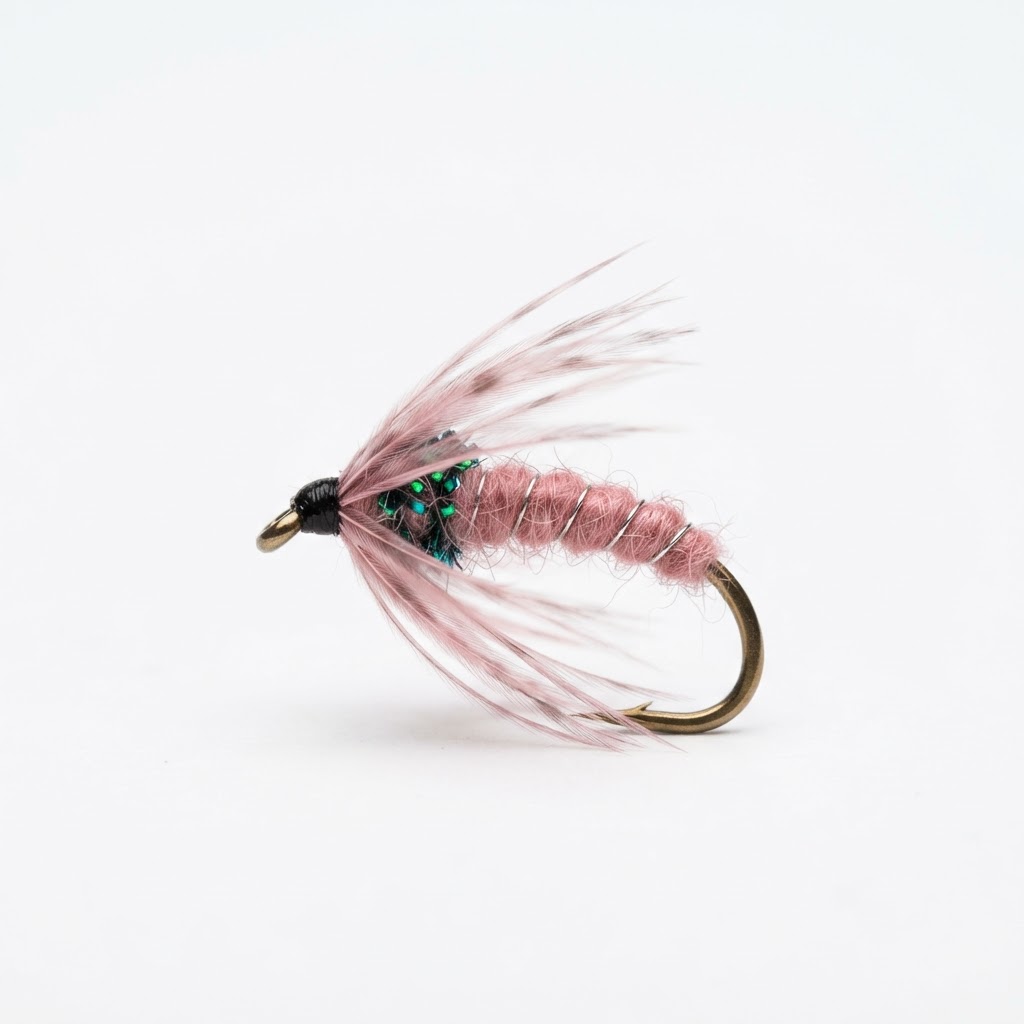
The Pink Soft Hackle
A dusty-pink soft hackle that imitates an emerging caddis or a small crustacean, depending on how you fish it. Our go-to searching pattern on the Guadalupe and Spring River when nothing else is moving.
The Recipe
- Hook
- Size 14–16 wet-fly or nymph hook (e.g. TMC 100 or 3761)
- Thread
- Pink 8/0, or grey if you want a subtler body
- Body
- Pink dubbing, tapered, ribbed with fine silver wire
- Thorax
- A small ball of peacock herl for contrast
- Hackle
- Hen saddle, soft, oversized by one hook size
Step by step
Six moves at the vise for the Pink Soft Hackle. Take your time; the rest of the fly hangs off the base.
- 01Start the thread behind the eye and lay a thread base to the bend.
- 02Tie in a length of fine silver wire at the bend, then dub a tapered pink body forward to about the two-thirds point.
- 03Rib the body with open turns of wire to the front, tie off, and break the wire.
- 04Build a small peacock-herl thorax just behind the eye.
- 05Tie in a soft hen saddle feather by the tip, take 2–3 turns, and tie off so the barbs sweep back over the body.
- 06Whip-finish behind the eye and add a tiny drop of head cement.
Watch, then tie along.
The three flies every tyer starts with, plus a cleaner take on the bugger once you've got the hang of it. Queue one up, set your vise next to the screen, and pause as you go.
The Woolly Bugger — Step by Step
The first fly everyone should tie. Covers the marabou tail, chenille body, and palmered hackle, three techniques you'll use forever.
with Beginner Friendly Fly Tying
Tie a Better Elk Hair Caddis
The dry fly that catches fish everywhere. Learn to stack elk hair, spin a dubbed body, and hackle a clean head.
with Fly Fish Food
Pheasant Tail X-Caddis
A nymph that's been catching fish for a hundred years. Pheasant tail, peacock herl, and a simple wire rib, the essence of tying.
with Fly Tying Tutorial
How to Tie the Black Swan River Reaper Popper
Our signature top-water popper. Foam head, rubber legs, and a body that barks. Tie it on an 8-weight and let the bass do the rest.
with Anglers All
Sharp scissors
One pair for thread and tinsel, one pair for everything else. Dull scissors are the number-one cause of ugly flies.
Less thread
Use the fewest wraps you can get away with. A fly tied sparse moves better in the water and looks more alive.
Whip finish by hand
You don't need a tool. Two fingers and a little practice and your heads will be smaller and cleaner.
Tie a dozen
The first three are for learning. The next nine are for fishing. Tie a dozen of one pattern before moving to the next.

